





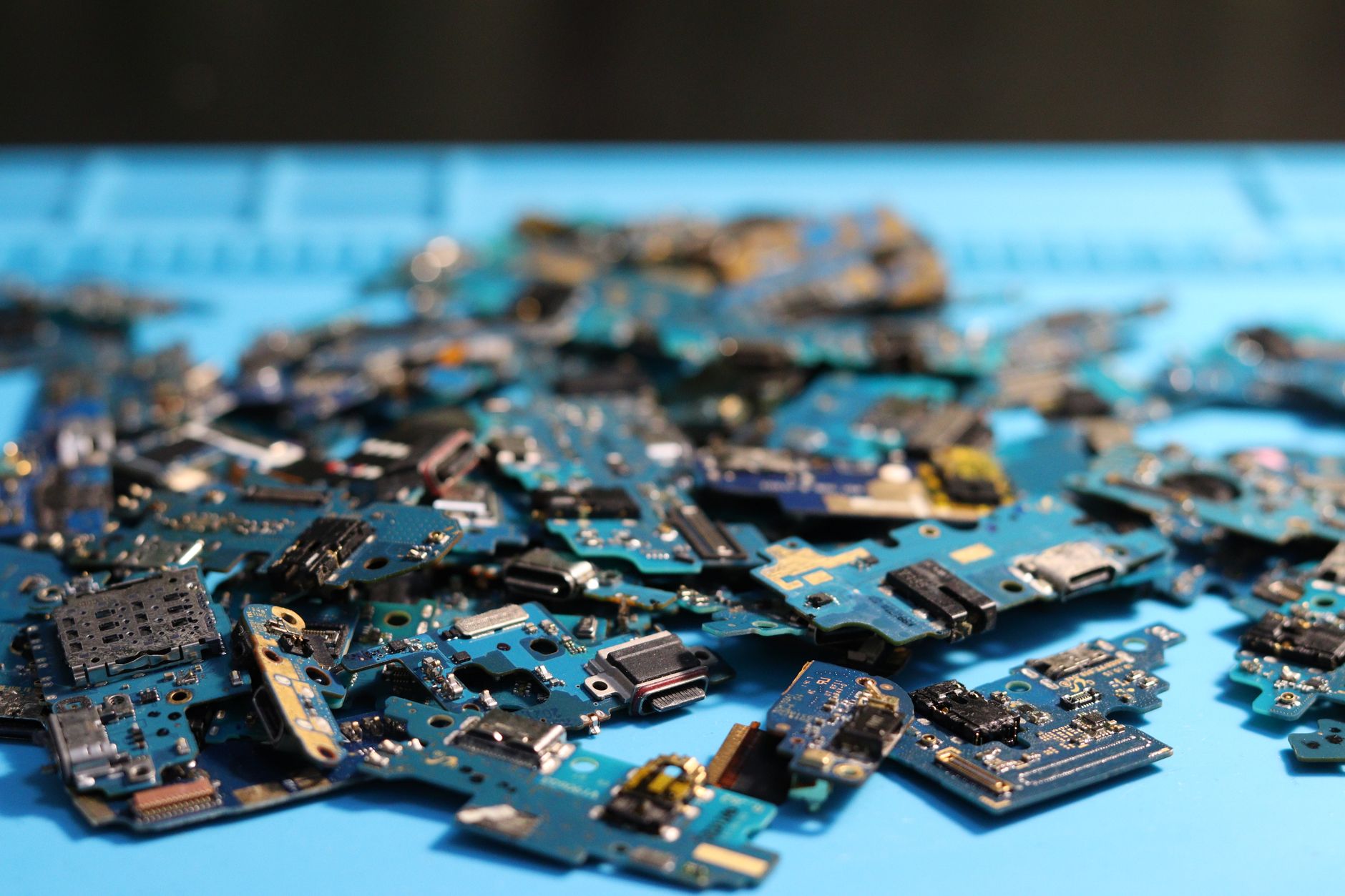
Custom silicon is now the arms race that actually matters in AI. OpenAI and Broadcom just made that clearer than ever with the Jalapeño inference chip — a purpose-built processor designed from the ground up to run large language models faster, cheaper, and at a scale that general-purpose GPUs simply weren’t designed for. Announced on June 24, 2026, the Jalapeño chip represents OpenAI’s most concrete step yet toward hardware independence — and it sends a very loud message to Nvidia.
Why OpenAI Needed Its Own Chip
This didn’t come out of nowhere. For years, OpenAI has been almost entirely dependent on Nvidia’s H100 and A100 GPUs to train and serve its models. That dependency is expensive. Nvidia’s data center GPUs command premium prices — H100s have sold for upwards of $30,000 per unit on the spot market — and supply has been notoriously constrained. When you’re running one of the most trafficked AI services on the planet, that’s a structural problem.
There’s also a deeper technical issue. GPUs are incredible for training — highly parallelized matrix operations are what they were built for. But inference workloads look different. You’re not running massive batches of identical operations. You’re handling thousands of simultaneous user requests, each with different token lengths, different context windows, different latency requirements. A general-purpose GPU is doing a lot of unnecessary work in that environment.
OpenAI isn’t alone in recognizing this. Google has been running its own Tensor Processing Units (TPUs) for years. Amazon has Trainium and Inferentia. Microsoft has its Maia chip. Meta is building custom silicon too. The pattern is clear: any company serious about running AI at scale eventually decides it needs hardware that isn’t designed for someone else’s use case.
Broadcom was the obvious partner. The company is one of the world’s leading custom ASIC designers — they’ve helped build chips for Apple, Google, and others. They know how to take a specialized workload and make silicon that’s brutally efficient at exactly that thing, nothing more.
What Jalapeño Actually Does
OpenAI hasn’t released a full technical datasheet yet, but from what’s been shared, Jalapeño is optimized across several dimensions that matter specifically for LLM inference.
- Memory bandwidth first: Inference is almost always memory-bandwidth-bound, not compute-bound. Jalapeño prioritizes high-bandwidth memory access to keep the model weights flowing to the compute units without bottlenecks.
- Low-latency token generation: The chip is designed to minimize time-to-first-token and inter-token latency — the two metrics that most directly affect how snappy a chatbot or API response feels to end users.
- Batching efficiency: Serving hundreds of simultaneous requests requires smart batching. Jalapeño’s architecture is built to handle continuous batching natively, which reduces idle compute and improves throughput.
- Power efficiency: Running inference at OpenAI’s scale means electricity costs are a massive operational expense. A chip that does more tokens per watt has direct, immediate impact on margins.
- Scalability across pods: Jalapeño is designed to work in large clusters, with interconnects optimized for multi-chip inference serving — important for running models like GPT-4 and future successors that don’t fit comfortably on a single chip.
The name is playful — very much in keeping with how AI labs have started branding their internal projects — but the engineering ambition behind it isn’t. This is OpenAI betting that it can design hardware that outperforms commodity GPUs specifically for the thing it does all day, every day: serving LLM responses to millions of users.
How It Compares to What’s Out There
Nvidia’s H200 GPU is currently the gold standard for both training and inference. It’s powerful, it’s flexible, and it benefits from Nvidia’s mature CUDA software stack. But flexibility has a cost — you’re paying for capabilities you don’t need when all you want is to run inference on a fixed set of models.
Google’s TPU v5e, by comparison, has shown that purpose-built inference hardware can dramatically reduce cost per query. Google has never published exact figures, but the company has said TPUs give it significant cost advantages over equivalent GPU deployments. That’s almost certainly a major reason OpenAI decided to move in this direction.
The wildcard comparison is Groq — the startup that’s built inference-only chips called LPUs (Language Processing Units) and demonstrated genuinely shocking token generation speeds. Groq has shown over 500 tokens per second on Llama models. If Jalapeño can hit numbers in that range at OpenAI’s scale, it changes the economics of every API call OpenAI sells.
What This Means for the Industry
Nvidia Isn’t Going Anywhere — But Its Moat Is Narrowing
Let’s be clear: Nvidia still dominates AI compute, and Jalapeño doesn’t change that overnight. OpenAI will continue buying Nvidia GPUs for training, and likely for inference too during a transition period. Custom silicon takes years to deploy at meaningful scale. But each major lab that builds its own inference chip is one less customer buying Nvidia’s most profitable products.
The cumulative effect matters. If Google, Amazon, Microsoft, Meta, and now OpenAI all divert a portion of their inference spend to custom silicon, that’s a non-trivial dent in Nvidia’s data center revenue growth story. Wall Street should be paying attention.
Cost Per Token Is the Real Competition
Here’s the thing: from a user and developer perspective, the chip itself is invisible. What matters is what it enables — specifically, lower prices and better performance at the API level. If Jalapeño lets OpenAI serve GPT-5 or its successors at a fraction of the current cost, that flows directly into pricing. OpenAI has already been cutting API prices aggressively. Custom silicon is one of the biggest levers it has left to keep doing that.
For enterprises deploying ChatGPT Enterprise at scale or developers building applications on OpenAI’s API, cheaper inference isn’t abstract — it’s the difference between a product being economically viable or not. I wouldn’t be surprised if we see another round of API price reductions within 12 months of Jalapeño reaching meaningful deployment scale.
The Vertical Integration Play
There’s a strategic dimension here beyond cost. OpenAI is increasingly building products — not just models. Agents, security tools, productivity features — all of which require inference at low latency and high volume. Controlling the hardware layer gives OpenAI the ability to make co-design decisions: optimize the chip for the models, optimize the models for the chip. That feedback loop is something you simply can’t get when you’re renting someone else’s hardware.
Google has been doing this for years with TPUs and Gemini. It’s a real advantage. And with models getting more capable and inference demands growing — especially as agentic workflows become standard — that advantage compounds over time.
What This Means for Developers and Enterprises
If you’re building on OpenAI’s API today, Jalapeño is mostly good news, even if the timeline is fuzzy. Here’s how to think about it:
- Lower latency responses will benefit any application where speed matters — customer support bots, coding assistants, real-time search.
- Lower API costs become likely as OpenAI’s infrastructure costs drop. Build your cost models conservatively now; pricing will probably improve.
- More headroom for context — efficient inference hardware makes long-context requests cheaper to serve, which matters for document analysis and agentic tasks.
- No changes required on your end — this is infrastructure-level. Your API calls work exactly the same way.
For teams thinking about model serving on their own infrastructure, Jalapeño is also a signal: the era of just throwing GPUs at LLM serving is ending. Specialized inference hardware is where the efficiency gains are, and the vendor landscape for that is expanding fast.
FAQ: OpenAI and Broadcom’s Jalapeño Chip
What is the Jalapeño chip and what makes it different from a regular GPU?
Jalapeño is a custom ASIC (application-specific integrated circuit) designed exclusively for running LLM inference workloads. Unlike GPUs, which are general-purpose processors adapted for AI, Jalapeño is engineered specifically to maximize throughput and minimize latency when serving language model responses — making it significantly more efficient for that task.
Will this change anything for OpenAI API users?
Not immediately in terms of how you interact with the API. Over time, Jalapeño should enable lower latency, higher throughput, and potentially lower pricing as OpenAI’s infrastructure costs improve. The chip is a back-end change that benefits end users indirectly.
When will Jalapeño be in production?
OpenAI hasn’t announced a specific timeline for full deployment. Custom silicon projects typically take 12-24 months to go from announcement to meaningful production scale, so widespread impact is likely a 2027 story.
Does this mean OpenAI is replacing Nvidia?
No — at least not anytime soon. Nvidia GPUs will remain central to OpenAI’s training infrastructure, and inference too during the transition. Jalapeño is a targeted bet on inference efficiency, not a wholesale replacement of the GPU stack.
The broader trajectory here feels inevitable: every major AI lab ends up building its own silicon eventually. OpenAI just took that step publicly. As OpenAI continues to scale its deployment infrastructure and model capabilities grow, having a hardware layer tuned for its specific workloads will become less of a competitive advantage and more of a basic requirement. The real question now is how fast Jalapeño reaches meaningful scale — and whether it’s the first of many OpenAI chips to come.