




Google just announced a significant upgrade to Android Auto and cars with Google built-in — and if you spend a meaningful chunk of your day behind the wheel, this one’s worth paying attention to. The update brings a more capable version of Gemini into the car, a richer entertainment experience, and what Google is calling a next-generation Android in the car. It’s the most ambitious overhaul to Google’s automotive software platform in years, and it arrives at a moment when the fight for the dashboard is genuinely heating up.
Why Google Is Doubling Down on the Dashboard Right Now
The car has always been a contested space for tech companies. Apple’s CarPlay has dominated consumer satisfaction surveys for years. Amazon quietly powers voice systems in millions of vehicles through Alexa Auto. And automakers themselves — particularly Tesla, but also GM with its Ultifi platform and Stellantis — have been pushing to own more of the software layer rather than hand it to a third party.
Google’s answer has been a two-track strategy: Android Auto for phones that mirror to the car’s screen, and the deeper cars with Google built-in integration that runs natively on the vehicle’s hardware. The latter is now in vehicles from Volvo, Polestar, Renault, and a growing number of other OEM partners. But until recently, the Gemini integration in cars felt like a watered-down version of what you’d get on your phone or on something like the Googlebook.
That changes with this update. Google is clearly betting that the car is one of the last genuinely captive attention environments left — and it wants Gemini to own that space before someone else does.
What’s Actually New: A Feature-by-Feature Breakdown
Google’s official announcement covers a lot of ground, so let’s break it down into what actually matters for drivers.
A More Capable Gemini Behind the Wheel
The headlining upgrade is Gemini itself. The version rolling out to Android Auto and built-in systems is meaningfully more capable than what was available before — able to handle more complex, multi-step requests without requiring the driver to repeat themselves or clarify intent. Google gives the example of asking Gemini to find a gas station that’s on your route, has good reviews, and is open right now. Previously that kind of query would have required multiple taps or follow-up questions. Now it’s supposed to resolve in a single conversational exchange.
This matters a lot for safety. The whole point of in-car voice assistants is reducing the cognitive load on the driver — but if the assistant constantly asks for clarification, it creates more distraction, not less. A Gemini that actually understands context and follows through on complex requests is a genuine improvement over the old Assistant-in-the-car experience.
Gemini in the car also now has better integration with your Google account context — meaning it can reference your calendar, your saved places, and your communication history to give smarter answers. Think: “Remind me to call my sister when I get home” actually working reliably, or Gemini knowing that your Tuesday evening commute usually ends at your gym rather than your house.
Rich Entertainment and a Redesigned Interface
Beyond Gemini, Google is rolling out what it’s describing as a premium entertainment experience. That includes:
- YouTube on the passenger screen — for vehicles with dual-screen setups, passengers can watch YouTube while the driver gets a clean navigation view
- Improved media controls across Spotify, YouTube Music, and other streaming partners, with better album art display and faster response times
- New fullscreen UI for widescreen displays — modern vehicles increasingly ship with large, landscape-oriented infotainment screens, and Google has redesigned the layout to take advantage of that real estate
- Expanded app support for third-party developers building for the automotive platform
- Google Maps upgrades including more detailed lane guidance and updated EV routing with real-time charger availability
The YouTube passenger screen feature is one I’d keep an eye on. It sounds like a small quality-of-life addition, but it’s actually a pretty significant monetization surface for Google — every minute of YouTube watched on a car screen is ad inventory. Don’t be surprised if this becomes a meaningful contributor to YouTube’s revenue line within two or three years.
Android Auto vs. Built-In: Who Gets What
Here’s where it gets a little nuanced. Not all of these features are available equally across both platforms. Cars with Google built-in — which run Android Automotive OS natively — get the full suite, including the deeper Gemini integrations and the passenger YouTube experience. Android Auto users, who are projecting from their phone, will get the improved Gemini conversational features and the UI refresh, but some hardware-dependent features (like the dual-screen entertainment) require the vehicle to support them natively.
If you’re shopping for a new car and you want the complete experience Google is showing off here, you’ll want to look specifically for vehicles badged as having Google built-in — not just Android Auto compatibility, which is nearly universal at this point.
What This Actually Means for the Market
Apple CarPlay Is Going to Feel the Pressure
Apple has had a comfortable lead in user satisfaction for in-car software for a long time. But Apple’s approach has always been phone-centric — CarPlay is fundamentally a mirror of your iPhone. That works well for iPhone users, but it also means Apple is somewhat limited in how deeply it can integrate with the vehicle itself.
Google’s native built-in approach gives it access to the car’s sensors, the vehicle’s own data, and the ability to run features even when the phone isn’t present. Combine that with a genuinely capable AI assistant — something Gemini has been building toward across Google’s product lines — and Google starts to look like the stronger long-term platform for automakers who want rich software capabilities.
Apple has announced a next-generation CarPlay with deeper vehicle integration, but it’s been frustratingly slow to ship. Google is moving faster right now, and automakers are noticing.
The Voice Assistant Battle Is Back
For a while, it felt like in-car voice assistants had stalled out. Amazon’s Alexa Auto lost momentum after Amazon scaled back its devices division. Siri in CarPlay has never been a standout experience. The old Google Assistant was fine but not impressive.
A genuinely capable conversational AI in the car — one that can handle multi-step requests, pull from your personal context, and respond quickly — is a different proposition entirely. This is the kind of feature that could actually change how people interact with their vehicles on a daily basis. The comparison isn’t really to the old Google Assistant. It’s to having something closer to the full Gemini experience available while you drive.
For Developers, This Is a Bigger Opportunity Than It Looks
Google is expanding its developer platform for automotive, which means more third-party apps will be able to build for the car environment. That’s significant. The automotive app ecosystem has been tiny compared to mobile — in part because the development requirements were onerous and the audience was fragmented. As Google standardizes the platform and grows the installed base of built-in vehicles, it starts to make economic sense for more developers to invest there.
I wouldn’t be surprised if we see a wave of purpose-built automotive apps over the next 18 months — not just mobile apps with a car mode bolted on, but software designed from the ground up for the driving context.
What This Means for You
If you drive a car that already has Google built-in, check for a software update — some of these features are rolling out over the air. If you’re using Android Auto via your phone, the Gemini and interface improvements should arrive as part of an app update, no new hardware required.
If you’re due for a new car purchase in the next year or two, the calculus on infotainment systems just got more interesting. The gap between a vehicle with native Google integration and one without is going to widen as Gemini gets more capable. It’s worth factoring into your decision in a way it maybe wasn’t two or three years ago.
Availability for the full feature set is tied to specific vehicle models and regional rollouts — Google hasn’t published a comprehensive list yet, but the Android Auto official page and individual automaker support pages are the best places to check compatibility for your specific vehicle.
Frequently Asked Questions
What’s the difference between Android Auto and cars with Google built-in?
Android Auto works by connecting your Android phone to your car’s display and mirroring a simplified interface — the processing happens on your phone. Cars with Google built-in run Android Automotive OS natively on the vehicle’s hardware, meaning they don’t need a phone to function and can integrate more deeply with vehicle systems like climate controls and EV range data.
When will the Gemini upgrades arrive in my car?
Google is rolling these out in stages. Built-in vehicles should receive over-the-air updates, with timing varying by automaker and model. Android Auto improvements will come through app updates on your phone. Google hasn’t committed to a single global launch date, so checking your vehicle’s software update screen and the Android Auto support page is the most reliable way to track availability.
Does this work with iPhones?
No. Android Auto and cars with Google built-in are Android and Google platforms. iPhone users connect via Apple CarPlay. The Gemini and entertainment features described here are exclusive to the Android and Google ecosystem.
How does this compare to what Tesla offers?
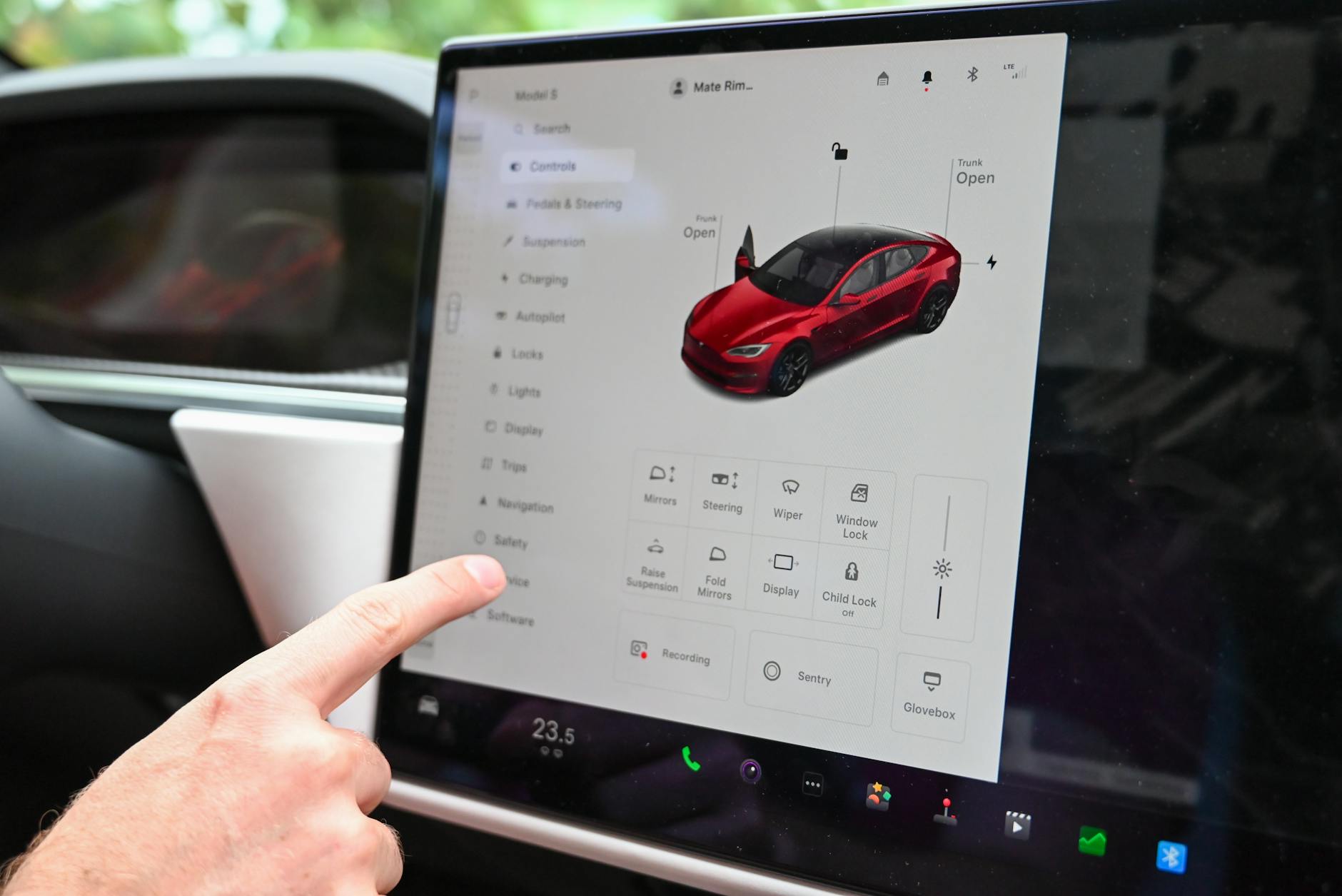
Tesla runs its own proprietary software and doesn’t support Android Auto or CarPlay. Tesla’s voice assistant has improved over the years but doesn’t use a conversational AI model as capable as Gemini at this point. The comparison is more relevant for non-Tesla vehicles where buyers are choosing between Google’s platform, Apple’s, or an automaker’s own solution.
Google’s push into the car feels like the beginning of something bigger — a platform play that uses the vehicle as a daily-use computing environment rather than just a navigation device. As Gemini continues to mature and the built-in vehicle fleet grows, the dashboard could become one of the most important AI interfaces Google owns.