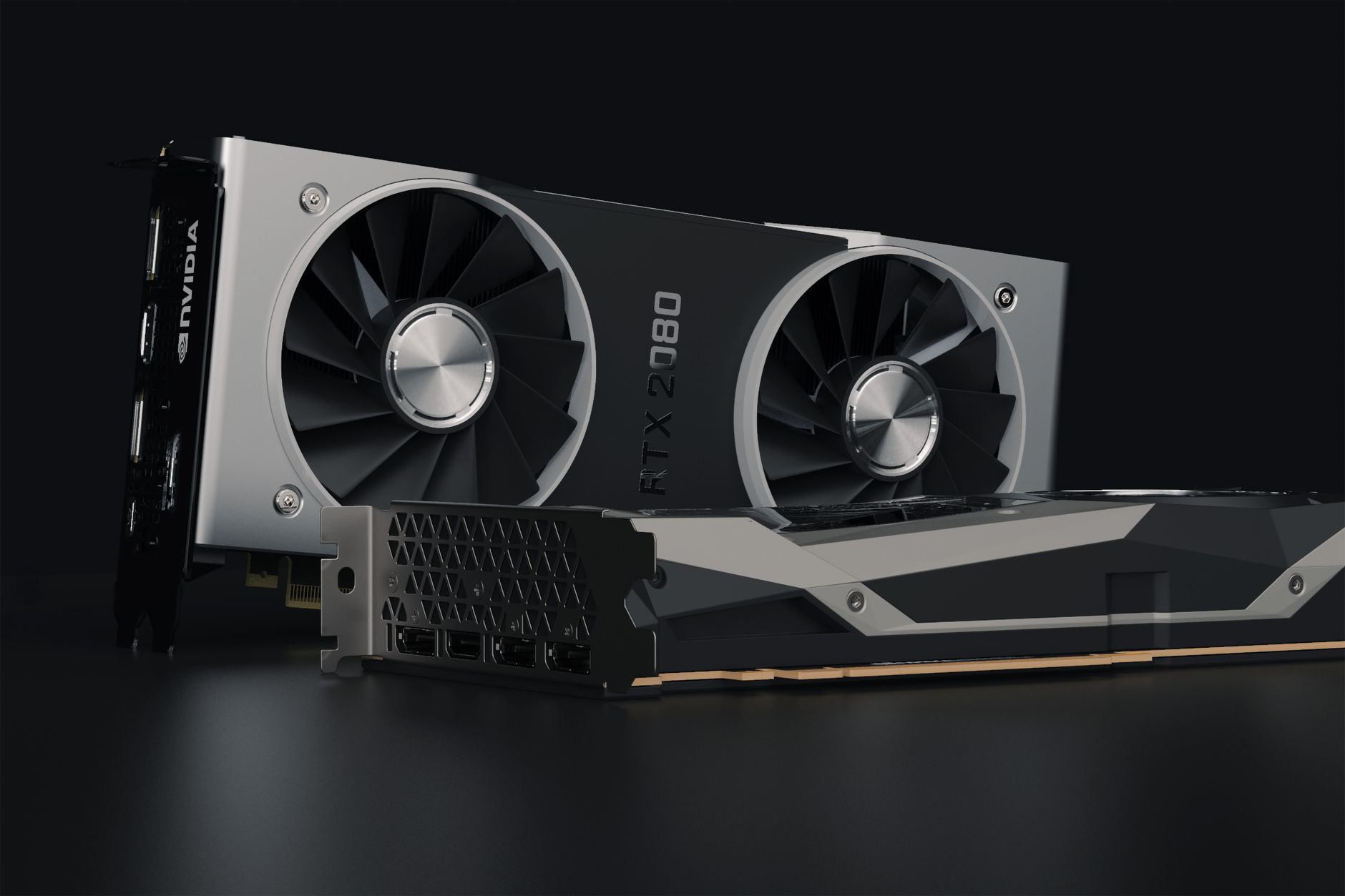






NVIDIA builds the chips that run most of the world’s AI workloads. So when OpenAI’s Codex, powered by GPT-5.5, becomes a core part of how NVIDIA’s own engineers and researchers write code, that’s not a footnote — that’s a signal worth paying close attention to. OpenAI published a detailed breakdown of how NVIDIA teams are using Codex in real workflows, and it’s more specific — and more interesting — than the usual vague enterprise testimonials.
Why NVIDIA Using Codex Actually Matters
There’s a certain irony in NVIDIA, a company whose GPUs power the inference clusters that run Codex, now depending on that same tool to write code. But that’s exactly where we are in 2026. The feedback loop between AI hardware and AI software tooling has gotten tight enough that even the companies building the infrastructure are consumers of what that infrastructure enables.
NVIDIA isn’t a company that historically brags about productivity shortcuts. Their engineers are working on CUDA kernels, distributed training frameworks, compiler optimizations — stuff that’s genuinely hard and where bugs cost real money. The fact that teams there have integrated Codex into production workflows isn’t a casual endorsement. It suggests the tool is doing something useful at a level of technical depth that most enterprise software can’t touch.
For context: Codex was originally introduced as a code-generation model back in 2021, a sibling to GPT-3 fine-tuned on GitHub data. It powered the first version of GitHub Copilot. Since then, OpenAI has rebuilt it significantly — the current version runs on GPT-5.5 and operates as an autonomous coding agent, not just an autocomplete engine. It can write tests, refactor entire modules, run code in sandboxed environments, and iterate based on output. That’s a meaningfully different product than what launched five years ago. You can read more about how OpenAI runs Codex safely inside real companies for a sense of the guardrails involved.
What NVIDIA Teams Are Actually Doing With It
The OpenAI writeup highlights two distinct use cases that map onto NVIDIA’s two main audiences: the production engineering teams and the research teams. They have different needs, and Codex is apparently handling both.
Production Engineering: Shipping Systems Faster
On the production side, NVIDIA engineers are using Codex to accelerate the kind of work that’s important but not exactly glamorous — writing boilerplate, generating tests, documenting APIs, refactoring legacy code. This isn’t surprising. These are the tasks where AI coding tools have shown the most consistent value across the industry.
But the more interesting detail is around system-level work. Teams are reportedly using Codex to help build and iterate on production systems where the codebase is large and the context requirements are high. GPT-5.5’s significantly expanded context window matters a lot here. You can feed it a substantial chunk of an actual production codebase and ask it to reason about changes, catch regressions, or propose architectural modifications — without the model losing the thread halfway through.
This tracks with what we’ve seen more broadly. How Simplex uses Codex to ship software faster painted a similar picture: the gains aren’t just in raw typing speed, they’re in the reduced cognitive overhead of context-switching during complex tasks.
Research: From Idea to Runnable Experiment
The research use case is where things get genuinely interesting. NVIDIA’s researchers — people working on things like new neural network architectures, training algorithms, or hardware-software co-design — are using Codex to compress the gap between having an idea and having a runnable experiment.
That gap is typically painful. A researcher might spend half a day just scaffolding the code needed to test a hypothesis: setting up data pipelines, configuring training loops, writing evaluation harnesses. None of that is the interesting intellectual work. It’s friction. If Codex can absorb a meaningful chunk of that scaffolding burden, researchers can run more experiments in the same amount of time. At the frontier of AI research, iteration speed is arguably the most important variable.
The claim from OpenAI is that NVIDIA researchers are turning ideas into runnable experiments faster than before. That’s hard to quantify externally, but it’s consistent with what a study of 1,000 researchers found about AI-assisted machine learning — the biggest wins weren’t in output quality, they were in time-to-first-result.
The GPT-5.5 Factor
It’s worth being specific about what GPT-5.5 brings to Codex that earlier versions didn’t. A few things stand out:
- Longer context handling: GPT-5.5 can process far more tokens without degrading, which is critical for large codebases where earlier models would effectively go blind after a few thousand lines.
- Better instruction-following: More precise responses to complex, multi-step coding tasks. Less hallucination of function names or API signatures that don’t exist.
- Stronger reasoning: The model is better at catching its own logical errors mid-generation, which matters for things like algorithm implementation or debugging subtle race conditions.
- Agentic capability: Codex on GPT-5.5 can run code, see the output, and revise — it’s not just generating text, it’s operating in a loop. This is what enables the research scaffolding use case.
- Domain depth: GPT-5.5 appears to have meaningfully stronger performance on scientific and systems-level code, which is exactly what NVIDIA engineers are writing.
Competitors aren’t standing still here. GitHub Copilot, now running on a mix of models including Claude and GPT-4o variants, is the dominant tool by install count. Anthropic’s Claude has made strong inroads with engineering teams who want longer context and more careful code generation. Google’s Gemini is increasingly baked into Android Studio and other developer surfaces. The coding assistant space is genuinely competitive, and no single tool has a lock on enterprise adoption.
What Codex has going for it specifically is the agentic framing — it’s positioned not as a fancy autocomplete but as an autonomous agent you can hand a task to and walk away from. Whether that framing holds up under real production pressure at scale is the open question.
What This Means for Developers and Enterprises
If NVIDIA — one of the most technically demanding engineering organizations on the planet — is getting real value from Codex, that’s a meaningful data point for other enterprises trying to evaluate AI coding tools.
Here’s how different audiences should read this:
- Enterprise engineering leaders: The NVIDIA case suggests Codex is viable for complex, production-grade codebases, not just simple CRUD apps. That’s a higher bar than most vendor case studies demonstrate.
- AI researchers: The experiment scaffolding use case is probably underappreciated. If your team is doing any kind of empirical ML research, even a 20% reduction in setup time per experiment compounds significantly over a research cycle.
- Individual developers: GPT-5.5’s improved context handling means Codex is more useful on large personal projects than earlier versions. If you tried it six months ago and found it losing the thread on anything bigger than a few files, it’s worth revisiting.
- Competitors: Being out-endorsed by your own hardware supplier is a notable moment for OpenAI’s enterprise positioning. It’s the kind of reference customer that other large organizations take seriously.
There’s also a broader implication for how we think about AI tooling adoption. We’ve covered how enterprises are actually scaling AI in 2026, and one consistent theme is that the organizations getting the most value aren’t using AI as a general assistant — they’re embedding specific tools into specific workflows. NVIDIA’s use of Codex fits that pattern exactly: defined tasks, technical depth, measurable outputs.
The Honest Caveats
OpenAI published this. That means it’s a marketing asset, not an independent audit. We don’t have error rates, we don’t have comparisons against alternative tools NVIDIA evaluated, and we don’t know what percentage of NVIDIA’s engineering org is actually using this versus a few enthusiastic teams that volunteered for the case study.
That skepticism doesn’t mean the underlying story is false — it means the details are curated. The most credible signal here isn’t the specific claims but the fact that NVIDIA agreed to be named at all. Companies don’t lend their brand to vendor case studies unless there’s something real they’re comfortable standing behind.
Frequently Asked Questions
What is OpenAI Codex and how does it differ from GitHub Copilot?
Codex is OpenAI’s autonomous coding agent, built on GPT-5.5, that can write, run, test, and iterate on code in a sandboxed environment. GitHub Copilot is an inline code completion tool that also uses OpenAI models but is focused on suggestions within your editor rather than autonomous task execution.
Is Codex available to individual developers or just enterprises?
Codex is available to ChatGPT Pro, Plus, and Team subscribers as of 2025, so it’s not exclusively enterprise. However, the agentic workflows described in the NVIDIA case — running on production codebases with organizational context — are more naturally suited to enterprise deployments with proper access controls.
How does GPT-5.5 improve Codex compared to earlier versions?
The main improvements are a significantly larger context window (critical for large codebases), stronger reasoning on complex multi-step tasks, better instruction-following precision, and more reliable behavior in agentic loops where the model runs code and revises based on output.
What should I do if I want to test Codex on my own engineering team?
Start with a specific, well-defined task type rather than open-ended use — something like test generation for an existing module or documentation for a legacy API. That gives you a clean baseline to evaluate actual output quality before committing to broader integration.
The NVIDIA story will likely become a standard reference point in enterprise AI sales conversations for the next year. More interesting to watch is whether other deep-tech companies — semiconductor firms, HPC labs, defense contractors — start publishing similar accounts. If Codex is genuinely holding up in those environments, the ceiling for what AI coding tools can do in production is higher than most people currently assume. I wouldn’t be surprised if we see a wave of similar case studies in the back half of 2026, as enterprise customers who signed on early start feeling comfortable enough to go on record.