





OpenAI wants AI to be as cheap and plentiful as electricity. That’s not a metaphor — it’s the actual framing behind “Building Abundant Intelligence,” the company’s latest strategic document published July 31, 2026. The core argument: advanced AI shouldn’t be a premium product for well-funded teams. It should be so affordable and capable that any individual, startup, or researcher can access frontier-level intelligence on demand. Bold claim. Here’s whether the strategy actually holds up.
How We Got Here: The Cost Problem OpenAI Created
There’s an uncomfortable irony at the center of this announcement. OpenAI spent years building some of the most expensive AI infrastructure on the planet, then charged accordingly. Early GPT-4 API access cost developers serious money — enough that startups routinely had to architect around the pricing, caching aggressively and batching calls just to stay solvent.
The pressure to change that didn’t come from altruism. It came from competition. Google’s Gemini family started undercutting on price. Anthropic repositioned Claude as an enterprise-grade but cost-conscious alternative. Meta kept releasing Llama weights for free. And smaller players like Mistral were shipping capable open-weight models that cost almost nothing to run if you had the hardware.
OpenAI responded with a pricing reset across its model lineup. We covered the specifics when GPT-5.6 Luna and Terra launched with aggressive new price points, and again when the intelligence-per-dollar story started to make sense. “Abundant Intelligence” is the strategic narrative that ties all those moves together into something coherent.
The question is whether it’s a genuine architectural commitment or a rebranding exercise for moves OpenAI was already making anyway.
The Full-Stack Approach, Broken Down
OpenAI’s document uses the phrase “full-stack” deliberately. They’re not just talking about model improvements — they’re describing a vertical integration strategy that touches compute, training efficiency, inference optimization, and product delivery simultaneously. That’s a meaningful distinction.
What “Full-Stack” Actually Covers
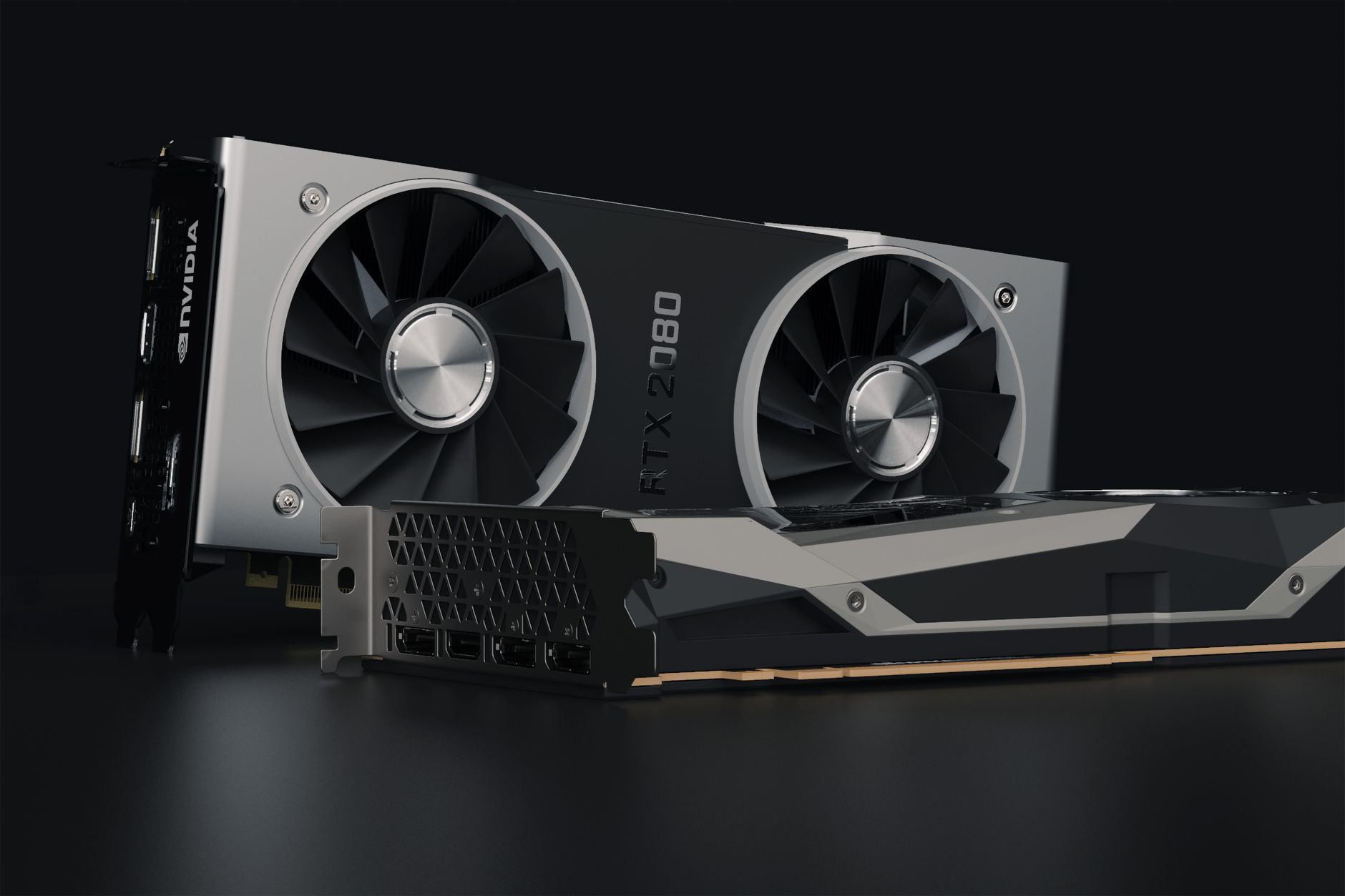
- Custom silicon and infrastructure: OpenAI has been investing heavily in its own compute layer, reducing dependence on Nvidia’s standard GPU allocation timelines. This gives them more control over inference costs at scale.
- Training efficiency gains: Each new model generation costs less to train per unit of capability. The document points to architectural improvements and better data pipelines as key drivers.
- Tiered model deployment: Rather than one flagship model, OpenAI now ships a spectrum — from lightweight models like Luna for high-volume tasks to heavier reasoning models for complex work. Each tier is priced to match its use case.
- Inference optimization: Speculative decoding, quantization, and batching improvements on the serving side are compounding cost reductions that don’t require any changes to the model itself.
- API accessibility: New endpoints, better documentation, and expanded free tiers for researchers and nonprofits. OpenAI’s recent move to give 100,000 researchers free ChatGPT access fits directly into this framework.
The synthesis here is important. Any one of these moves in isolation is incremental. Together, they’re supposed to create a compounding effect where the cost of deploying a capable AI agent keeps falling quarter over quarter. That’s the theory, anyway.
The Benchmark Signal
OpenAI backs the capability claims with benchmark performance, specifically pointing to gains on complex reasoning tasks. This tracks with what developers have been discovering in practice — certain API configurations unlock significantly better performance without any model changes. The ARC-AGI-3 results where two API settings tripled scores are a good example of how much headroom still exists in how these models are called, not just how they’re built.
That’s actually a useful lens for reading the “abundant intelligence” framing. A lot of the value OpenAI is describing isn’t coming from building entirely new models — it’s coming from making existing models more accessible, better-documented, and easier to use at scale. That’s a real form of progress, even if it’s less glamorous than a new architecture announcement.
Who This Strategy Actually Targets
Reading between the lines, OpenAI is chasing three distinct audiences with this document, and the pitch is different for each one.
Developers and Startups
This is the most obvious target. Cheaper inference means startups can build AI-native products without the unit economics falling apart as they scale. The tiered model lineup — where you route simple tasks to Luna and complex ones to a heavier model — is designed specifically for this use case. A well-architected app can now run mostly on cheap tokens and only escalate to expensive compute when the task genuinely requires it.
The practical implication: products that were financially unviable twelve months ago are now buildable. That’s not a small thing. It shifts what gets built.
Enterprise Buyers
For large organizations, the “full-stack” framing is a sales argument as much as a technical one. It says: you don’t need to stitch together multiple vendors for compute, models, and fine-tuning infrastructure. OpenAI can be the single stack. Given how aggressively Anthropic has been expanding enterprise partnerships — including the recently reported Cognizant expansion for Claude — OpenAI needs a compelling counter-narrative for enterprise procurement conversations.
Researchers and the Public Sector
The free access programs and reduced pricing tiers signal that OpenAI is trying to reposition itself as infrastructure for public benefit, not just a commercial AI vendor. This matters for regulatory optics as much as market share. Governments evaluating AI policy are more likely to engage constructively with a company that frames itself as building shared infrastructure than one that looks like it’s cornering a market.
Where the Strategy Gets Complicated
Here’s the thing: “abundant intelligence” as a goal is genuinely appealing. The execution risks are real, though.
First, there’s the compute constraint. OpenAI’s ability to keep cutting prices depends on either building cheaper infrastructure or improving model efficiency faster than demand grows. Right now, demand is growing fast. Data center capacity is constrained globally. Nvidia’s supply chain is not unlimited. If inference demand spikes faster than efficiency gains materialize, the pricing promises get harder to keep.
Second, the competitive dynamics are brutal. Google has deep infrastructure advantages and is expanding its managed agent offerings aggressively. Meta is giving away capable models for free. The floor on AI pricing keeps dropping because of open-source competition, not just because of OpenAI’s efficiency work. OpenAI can’t control that floor — they can only try to stay ahead of it on capability.
Third, “full-stack” integration is genuinely hard to execute. The history of tech is littered with companies that announced vertical integration strategies and then spent years struggling with the complexity. Building custom silicon, optimizing inference, shipping consumer products, and running an API business simultaneously is a lot of surface area to manage well.
I wouldn’t be surprised if some parts of this strategy land cleanly — the tiered pricing model seems well-thought-out — while others take longer than the document implies. That’s usually how these things go.
What This Means for Developers Right Now
If you’re building on top of OpenAI’s API today, the practical takeaway is straightforward:
- Route high-volume, lower-complexity tasks to the cheapest capable model in the lineup. The cost difference is significant enough to matter at scale.
- Experiment with API parameters before assuming you need a more expensive model. The benchmark evidence suggests there’s often more performance headroom in how you call the model than in which model you call.
- Watch the fine-tuning and custom model tiers — if OpenAI follows through on the full-stack promise, the ability to fine-tune at lower cost could become a genuine competitive advantage for specialized use cases.
- If you’re evaluating alternatives, the Claude and Gemini pricing tiers are worth a serious comparison. The gap between providers has narrowed enough that the right choice depends heavily on your specific workload.
FAQ
What is OpenAI’s “abundant intelligence” strategy?
It’s OpenAI’s framework for making advanced AI more capable and significantly cheaper through a combination of infrastructure investment, model efficiency improvements, tiered pricing, and expanded access programs. The goal is to make frontier AI accessible to a much broader range of users and developers, not just well-funded organizations.
How does this affect API pricing for developers?
OpenAI has already implemented tiered pricing across its model lineup, with lighter models like GPT-5.6 Luna priced for high-volume use cases. The strategy suggests continued price reductions as efficiency gains compound, though specific future pricing isn’t guaranteed in the document.
How does this compare to what Google and Anthropic are doing?
All three major providers are pushing on price and accessibility simultaneously, which suggests competitive pressure rather than any single company’s generosity is driving the trend. Google has infrastructure advantages; Anthropic is focused on enterprise reliability; OpenAI is betting that vertical integration gives it the most control over the cost curve long-term.
When will these changes be fully in place?
Some are already live — the tiered model lineup and expanded researcher access programs are running now. The deeper infrastructure investments in custom silicon and inference optimization are longer-horizon bets that will take years to fully materialize, and OpenAI hasn’t committed to specific timelines for those components.
The real test of “abundant intelligence” isn’t the strategy document — it’s whether the pricing curve keeps bending downward while capability keeps improving. That’s a hard thing to promise and a harder thing to deliver. OpenAI has the resources and the track record to make it credible. Whether they execute is a question that the next 18 months will start to answer.