




Google has been trying to make Wear OS matter for years. After a rocky half-decade of half-measures, abandoned hardware partners, and a merger with Samsung’s Tizen that produced mixed results, the platform finally feels like it has a real direction. Wear OS 7, announced at Google I/O 2026, pairs a set of genuinely useful glanceable interface upgrades with something bigger on the horizon: Gemini Intelligence coming to select devices later this year. That combination might be the most coherent smartwatch strategy Google has put together since the platform launched back in 2014.
How We Got Here: Wear OS’s Long Road to Relevance
Let’s be honest — Wear OS spent most of its early life as an afterthought. Google Watch faces, fitness tracking, and notification mirrors were fine, but Apple Watch was eating the market while Android smartwatch makers struggled to differentiate. The 2021 Wear OS relaunch, built jointly with Samsung, brought real performance improvements and a cleaner UI. The Pixel Watch line, starting in 2022, gave Google skin in the game with its own hardware.
But the software still felt reactive. You’d get features that Apple Watch had introduced two years prior. Battery life remained a persistent complaint. And the intelligence layer — the thing that could make a smartwatch feel genuinely useful rather than a second screen on your wrist — was mostly absent.
Wear OS 7 is Google’s attempt to change that narrative, and the timing isn’t accidental. Apple’s watchOS 12 is expected to push deeper Apple Intelligence integration, and Samsung’s Galaxy AI features on the Watch 7 series have already raised the bar for what on-wrist AI assistance looks like. Google needed to respond, and Wear OS 7 is that response.
What Wear OS 7 Actually Changes
The headline feature category is what Google calls glanceable features — a philosophy that the watch interface should surface the right information before you even think to look for it. This sounds obvious, but the implementation details matter a lot here.
Smarter Watch Faces and Dynamic Complications
Watch face complications in Wear OS 7 are now context-aware. Instead of showing you the same static weather readout all day, complications can shift based on time, location, and activity. Heading into a meeting? Your next calendar event surfaces automatically. Mid-run? Your pace and heart rate take priority without you touching anything.
This is table stakes territory compared to what Apple Watch has done with Smart Stack widgets since watchOS 10, but Google’s version pulls from a broader data pool — Google Calendar, Maps, Fit, and third-party apps — which could give it an edge for heavy Google ecosystem users.
Gemini Intelligence: The Bigger Story
The more significant announcement is that Gemini Intelligence is coming to select Wear OS devices later in 2026. Google hasn’t fully spelled out which devices qualify, but the expectation is that the Pixel Watch 3 and newer hardware will be in scope, along with compatible Samsung Galaxy Watch models running Wear OS.
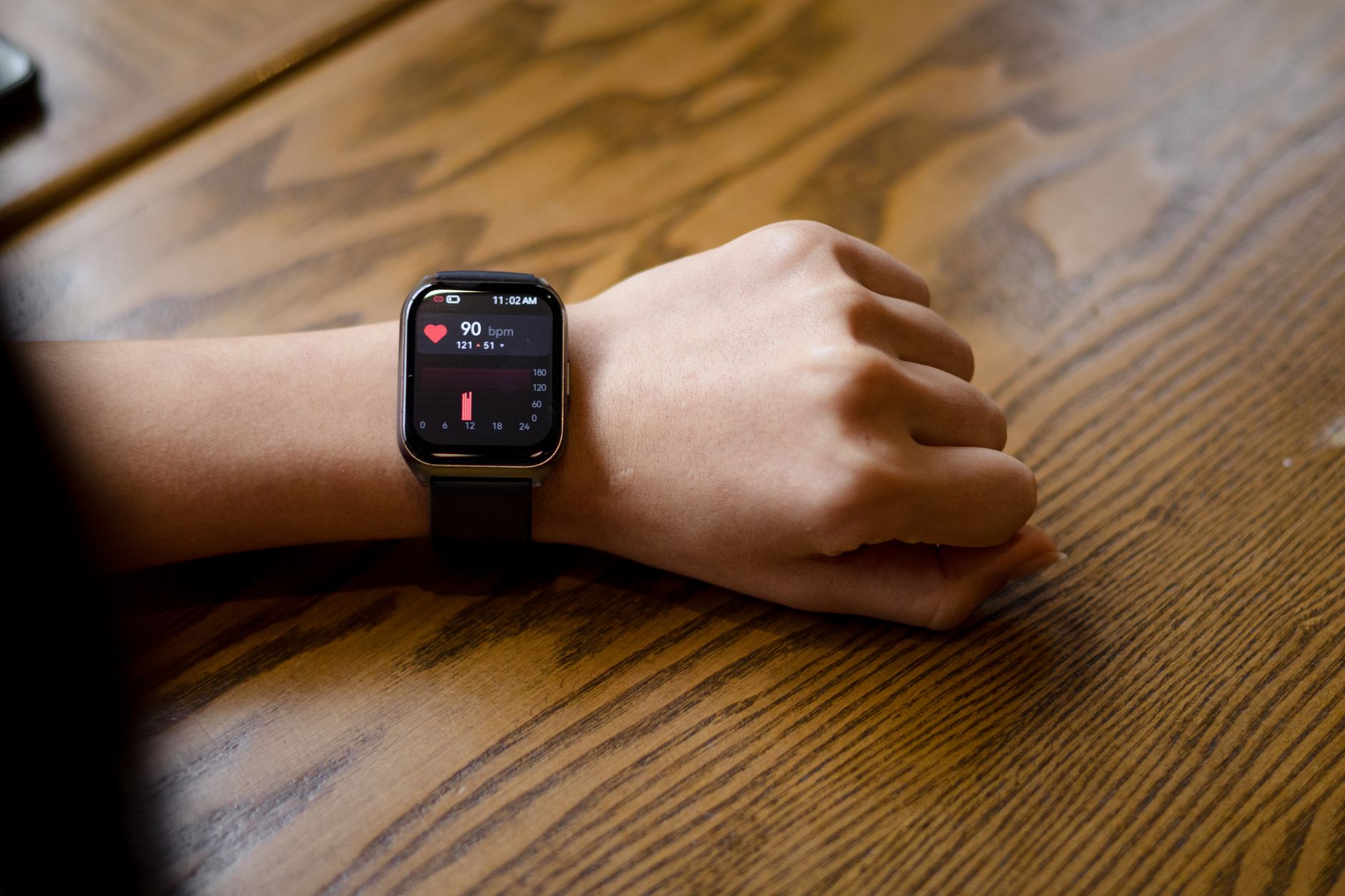
What does Gemini on your wrist actually look like? Based on what Google has shared, it’s not a full conversational AI assistant in the ChatGPT sense. Think more targeted: summarizing long notifications so you don’t have to squint at a paragraph of text on a 1.4-inch display, suggesting quick replies that actually sound like you, and proactive nudges based on your patterns — like reminding you to leave early because traffic on your usual route looks rough.
Here’s the thing: that’s actually more useful than a full chatbot on your wrist. Nobody wants to dictate long prompts to their watch in public. Contextual intelligence that works quietly in the background? That’s genuinely valuable.
Health and Fitness Updates
Wear OS 7 also brings updates to the health tracking stack, though Google has been lighter on specifics here. The core improvements include:
- Improved sleep stage detection with more granular REM and deep sleep breakdowns
- Heart rate variability trends surfaced more prominently in the Fitbit app integration
- Workout detection that now covers a wider range of activities, including pickleball (yes, really)
- Better integration with third-party health apps via updated Health Connect APIs
- Emergency SOS improvements with faster location sharing to emergency contacts
The Fitbit integration remains a work in progress, if we’re being fair. Google acquired Fitbit in 2021 for $2.1 billion, and the software consolidation has been slower than anyone expected. Wear OS 7 moves further toward a unified experience, but some Fitbit-specific features still live in a separate app rather than baked into the OS directly.
How This Stacks Up Against Apple and Samsung
The competitive landscape here is pretty clear. Apple Watch with watchOS 12 and Apple Intelligence has a head start on on-device AI features, particularly Siri improvements and notification summarization. Samsung’s Galaxy Watch Ultra and Watch 7 series have been running Galaxy AI features — including real-time translation and AI-powered sleep coaching — since late 2025.
Google’s advantage, if it plays its cards right, is Gemini’s multimodal capabilities and deep integration with Google’s broader services. Apple Intelligence is powerful but largely siloed to Apple’s own apps. Samsung’s Galaxy AI is solid but depends on Qualcomm’s Snapdragon W series chips for on-device processing.
Google’s approach with Gemini — where some processing happens on-device and heavier queries route through the cloud — gives it flexibility. It also means you’re more dependent on a data connection for the best experience, which is worth flagging for users who want full offline functionality.
I wouldn’t be surprised if the Gemini features on Wear OS end up being the most practically useful AI-on-wrist implementation we’ve seen, simply because Google has more context about your daily life — your Gmail, your calendar, your Maps history — than Apple or Samsung can access by default. The privacy implications of that are real, but for users already deep in Google’s world, it’s a genuine differentiator.
What This Means for Developers and Hardware Partners
For developers building Wear OS apps, Wear OS 7 brings updated APIs that make it easier to surface information in complications and tiles without users having to open a full app. That’s the right direction. One of Wear OS’s persistent problems has been that too many app experiences required tapping through multiple screens — defeating the purpose of a device you’re supposed to glance at.
The Gemini Intelligence APIs, when they open up more broadly, could let third-party health apps, productivity tools, and even fitness trackers plug into the same summarization and proactive notification features Google is building for its own apps. That’s a genuinely open question right now — Google hasn’t confirmed the full scope of third-party access.
Hardware partners like Samsung benefit from a stronger platform. A more capable Wear OS makes the Galaxy Watch line more competitive against Apple Watch without Samsung having to build the AI stack entirely from scratch. This mirrors what’s happening on the phone side, where Google’s AI features increasingly flow to Android OEM partners — something we covered in detail in our piece on Google’s broader AI expansion strategy.
It’s also worth watching how Gemini’s rollout on wearables compares to its expansion on other surfaces. Google has been methodically pushing Gemini into more products — as we noted when Gemini in Chrome expanded to Latin America, Africa, and the Middle East — and Wear OS is the next logical frontier.
Key Takeaways
- Wear OS 7 focuses on glanceable, context-aware features that surface information without requiring active interaction
- Gemini Intelligence is coming to select Wear OS devices in late 2026 — expect Pixel Watch 3 and newer Galaxy Watch models to qualify
- The practical Gemini features on watch — notification summaries, smart replies, proactive nudges — are more useful than a full chatbot would be
- Health tracking improvements include better sleep staging and expanded workout detection, with deeper Fitbit integration still in progress
- Google’s edge over Apple and Samsung is its access to cross-service context (Gmail, Maps, Calendar), though that cuts both ways on privacy
- Developer APIs for complications and tiles are improved, with the potential for third-party Gemini access still TBD
Frequently Asked Questions
Which devices will get Gemini Intelligence on Wear OS 7?
Google hasn’t published a full compatibility list yet, but the expectation based on hardware requirements is that Pixel Watch 3 and newer, along with select Samsung Galaxy Watch models running Wear OS, will qualify. Budget Wear OS devices from other manufacturers may not make the cut due to processing constraints. Google has said more details are coming later in 2026.
How is Wear OS 7 different from Wear OS 6?
Wear OS 7 puts its biggest focus on glanceable features and AI-driven context awareness — the interface adapts to what you’re doing rather than staying static. It also lays the groundwork for Gemini integration, which wasn’t present in Wear OS 6. The health tracking stack has also been refreshed with improved sleep and workout detection.
Does Wear OS 7’s Gemini require an internet connection?
Google uses a hybrid approach where lighter on-device processing handles some tasks, while more complex Gemini queries route through the cloud. For the best experience — particularly richer notification summarization and proactive suggestions — a data connection will be needed. Basic watch functions work offline as before.
When is Wear OS 7 available?
Google announced Wear OS 7 at I/O 2026 in June, with a rollout expected across compatible devices through the second half of 2026. Gemini Intelligence features specifically are slated for “later this year,” which likely means a fall 2026 timeframe — possibly aligned with new Pixel Watch hardware announcements.
Google’s smartwatch platform has rarely moved this decisively. Whether Gemini on the wrist delivers on its practical promise — or becomes another feature that sounds better in a keynote than in daily use — will be the real test when these updates land on users’ wrists this fall. Given how central Gemini has become to Google’s product strategy across the board, the pressure to get this right is real. The wearable AI race just got a lot more interesting.