





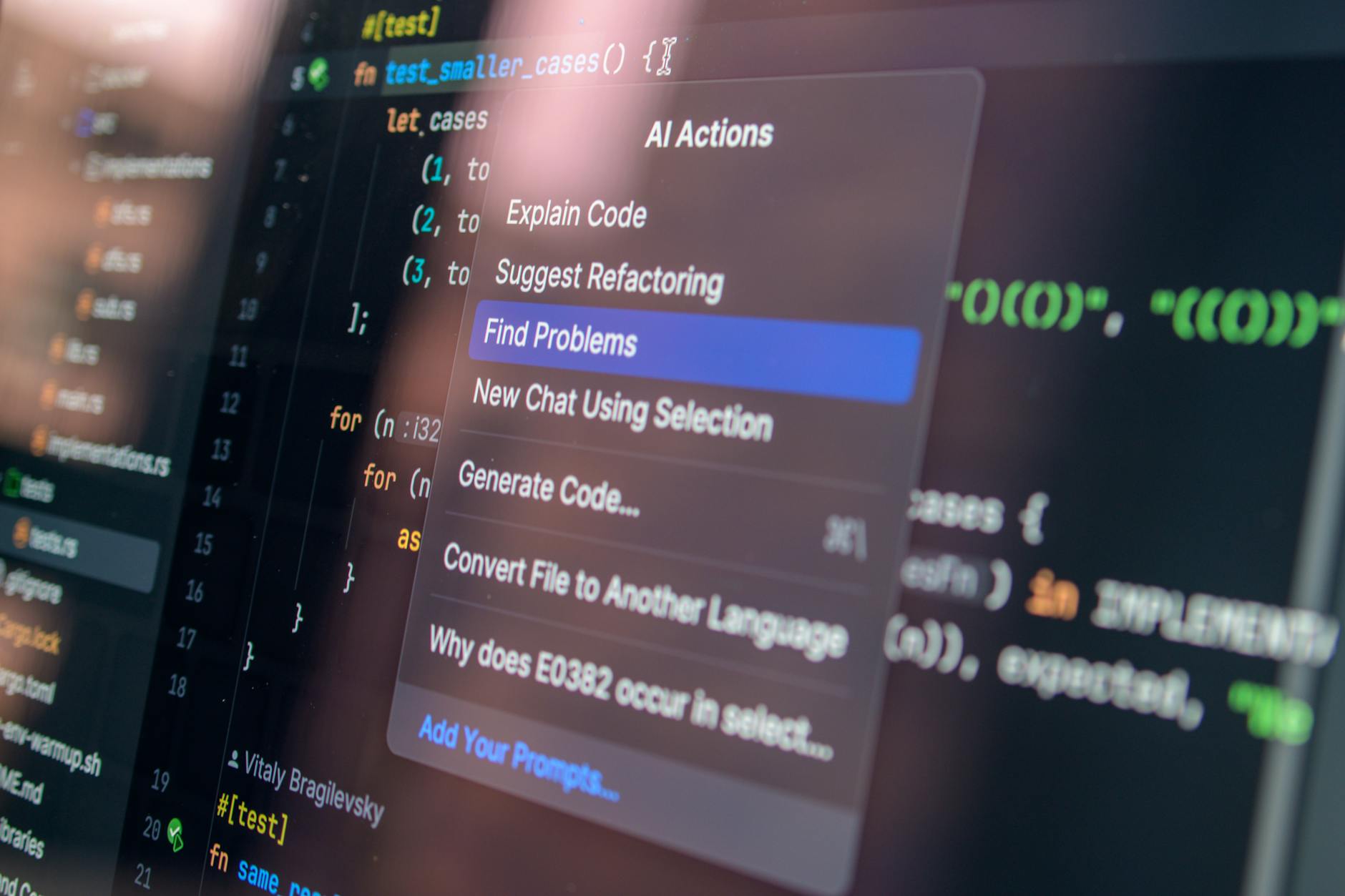
Google just made its Google AI Studio a lot more interesting for paying subscribers. Starting April 20, 2026, Google AI Pro and Google AI Ultra members get increased usage limits inside AI Studio — plus access to Nano Banana Pro and the latest Gemini Pro models. The headline feature, though, is something Google is calling vibe coding in AI Studio — a natural-language-first approach to building software that’s been making noise in developer circles for months. This isn’t a minor update. It’s Google planting a flag in the fast-growing space of AI-assisted development, and it’s coming with real teeth.
What Is Vibe Coding and Why Does Google Want In?
If you haven’t heard the term yet, vibe coding refers to the practice of building software primarily by describing what you want in plain language — letting an AI handle the actual code generation. You iterate conversationally. You don’t necessarily read every line. The AI writes, you test, you redirect. It’s less traditional programming and more like directing a very fast, very literal junior developer.
The concept took off partly because tools like Cursor and GitHub Copilot started demonstrating that decent working prototypes could be spun up in minutes by people with minimal coding backgrounds. Then OpenAI leaned into it hard with Codex updates — we covered how OpenAI Codex picked up computer use, browsing, and memory earlier this year. Google’s move here isn’t coincidental. It’s a direct response to the competitive pressure from that side of the aisle.
Here’s the thing: vibe coding is genuinely useful for a specific kind of developer. Not for someone writing production-grade distributed systems at scale, but for the indie developer building a SaaS MVP, the data scientist who needs a quick dashboard, or the designer who wants to prototype an interaction without learning React from scratch. That audience is enormous, and Google wants to own it.
What’s Actually in the Update
Let’s be specific, because the details matter here. Google’s announcement packs a few distinct changes into one release:
- Increased usage limits for AI Studio — Pro and Ultra subscribers can now make more requests per day without hitting rate limits. Google hasn’t published exact numbers publicly, but this directly addresses one of the main complaints developers had about using AI Studio for sustained work sessions.
- Nano Banana Pro access — This is Google’s next step in the Nano Banana model line, which has been evolving quickly. The Pro variant brings stronger multimodal reasoning to the table, which is relevant for vibe coding scenarios where you might be feeding in UI screenshots or design mockups alongside your text prompts.
- Gemini Pro model access — Ultra subscribers in particular get access to the most capable Gemini Pro models, meaning the underlying engine doing the code generation is top-shelf.
- Native vibe coding interface — AI Studio now includes a more structured environment for iterative, prompt-driven development. Think of it as a coding workspace that’s been redesigned to support the back-and-forth nature of AI-assisted building rather than one-shot queries.
The subscription context is worth spelling out. Google AI Pro runs at $19.99/month and Google AI Ultra is $249.99/month — the Ultra tier being positioned at power users and developers who need the most capable models with the fewest restrictions. For Ultra subscribers especially, getting AI Studio access bundled in starts to make that price tag feel more defensible.
How This Compares to the Competition
OpenAI has been aggressive here. GPT-5-class models are accessible through ChatGPT Plus and API, and the Codex environment has been pushing toward exactly the kind of agentic, multi-step coding workflow that vibe coding implies. Microsoft’s GitHub Copilot — which runs on OpenAI models — is deeply embedded in VS Code and has a massive installed base among professional developers.
Anthropic’s Claude has also carved out a reputation for being particularly good at code, especially longer, more complex files where context management matters. And Google’s own API billing changes earlier this year signaled that they’re thinking seriously about developer economics, not just consumer features.
So where does AI Studio fit in this picture? Google’s advantage is integration. If you’re already in the Google Cloud orbit, already using Vertex AI, already relying on Google Workspace — AI Studio becomes a natural extension rather than a new tool to learn. That’s a real competitive moat, even if it’s less flashy than a headline benchmark score.
The Nano Banana Pro Question
Nano Banana Pro deserves a closer look. The Nano Banana line has been Google’s answer to the demand for capable models that can run closer to the edge or handle more personal, contextual tasks. The Pro tier suggests meaningful capability improvements over Nano Banana 2 — better reasoning, likely better code output, and probably improved instruction-following for complex multi-step prompts.
In a vibe coding scenario, instruction-following is everything. If you tell the model “build me a login page with Google OAuth, store sessions in Redis, and make it look like this Figma screenshot,” you need the model to hold all of that in context, make reasonable decisions about the parts you didn’t specify, and produce something that actually runs. That’s a tall order. The gap between a model that does this adequately and one that does it well is enormous in practice.
What This Means for Different Kinds of Users
For Indie Developers and Solo Builders
This is probably the most interesting group. If you’re building something on your own — a tool, an app, a script-heavy workflow — the combination of increased rate limits and a vibe coding interface in AI Studio is genuinely useful. The old frustration of hitting a limit mid-session while you’re on a roll was real. Removing that friction matters more than it sounds.
The catch is price. $19.99/month is reasonable if AI Studio is part of your actual development workflow. If you’re just experimenting occasionally, you’re probably better off staying on the free tier and accepting the restrictions.
For Enterprise Developers
Ultra subscribers at $249.99/month are getting a serious toolkit. Access to the most capable Gemini Pro models, plus the structured vibe coding environment, plus the existing AI Studio features like function calling, grounding, and system prompt controls — that’s a coherent developer platform, not just a chatbot with a code block.
I wouldn’t be surprised if Google starts seeing AI Studio positioned more explicitly as a Copilot competitor in enterprise sales conversations. The pieces are there. It’s a matter of how aggressively Google goes after that positioning.
For Non-Technical Creators
Vibe coding has a genuine appeal for people who have ideas but not implementation skills. An AI Studio experience designed around natural language first — rather than forcing users to think in code — could lower the barrier meaningfully. Whether Google’s implementation is smooth enough to actually deliver on that promise is the open question. The interface design matters as much as the model quality here.
It’s also worth watching how this intersects with Google’s broader Gemini app expansion across platforms — if the desktop experiences start feeling more unified, AI Studio could become the developer-facing layer of a much larger product surface.
FAQ
What is vibe coding in Google AI Studio?
Vibe coding is a style of software development where you describe what you want in plain language and let an AI model generate the code. Google AI Studio now includes a dedicated interface for this workflow, designed around iterative, conversational prompting rather than traditional text-editor-style coding.
Who gets access to these new AI Studio features?
Google AI Pro ($19.99/month) and Google AI Ultra ($249.99/month) subscribers get the increased usage limits and access to Nano Banana Pro and the latest Gemini Pro models in AI Studio. Free tier users retain access to AI Studio but with more restrictive rate limits.
How does this compare to GitHub Copilot or OpenAI Codex?
GitHub Copilot is deeply integrated into VS Code and targets professional developers in their existing environment. OpenAI Codex is increasingly agentic, handling multi-step tasks with browsing and memory. Google AI Studio’s vibe coding positions itself as a more accessible, browser-based alternative with strong ties to Google’s model family and cloud infrastructure.
Is Nano Banana Pro a new model or an upgrade?
Nano Banana Pro is the next step in Google’s Nano Banana model line, bringing improved multimodal reasoning and stronger instruction-following compared to Nano Banana 2. It’s particularly relevant for vibe coding tasks that involve visual inputs like UI designs or screenshots alongside text prompts.
Google is clearly treating AI Studio as a serious developer platform now, not just a playground for API experimentation. The vibe coding push, the model upgrades, and the subscription tier integration all point in the same direction. Whether developers actually adopt it as a primary tool depends on how the experience holds up under real workloads — and that’s something only sustained use will reveal.