




Most bug reports don’t start with an 18-year-old software defect and a hardware fault conspiring in the same failure. But that’s exactly what OpenAI engineers uncovered when they applied large-scale core dump analysis to a baffling series of rare infrastructure crashes — and the story of how they found it is worth understanding in detail, because it points to something bigger about how AI companies maintain reliability at scale.
The Problem Nobody Could Reproduce
Rare, hard-to-reproduce crashes are the worst kind of infrastructure problem. They don’t happen often enough to catch in staging. They don’t leave obvious footprints. And at the scale OpenAI operates — running training runs and inference workloads across tens of thousands of GPUs simultaneously — even a “rare” crash rate can translate into meaningful downtime when you’re doing it thousands of times a day.
The crashes in question were intermittent failures in OpenAI’s data infrastructure. Not catastrophic, not frequent, but persistent. The kind of thing that gets a ticket opened, gets triaged, sits in a backlog, gets re-prioritized after the next big incident, and quietly accumulates. Engineers suspected hardware. They suspected race conditions. They didn’t know.
What they needed was data — not log lines, but actual memory snapshots of the process at the moment it died. That’s what a core dump gives you: a complete image of a process’s memory, registers, and execution state, frozen at the point of crash. The challenge is that core dumps are large, expensive to collect systematically, and even more expensive to analyze at scale. Most teams ignore them unless a crash is truly critical.
OpenAI’s team decided not to ignore them. Instead, they built tooling to collect and analyze core dumps across a large fleet of machines — essentially running epidemiology on crashes the way a public health team tracks disease outbreaks. Look at enough cases, find the patterns, trace them back to a common cause.
What the Core Dump Analysis Actually Found
The results were more interesting than anyone expected. Two distinct root causes emerged, and they were completely unrelated to each other — which is itself a warning sign that something systemic had been lurking for a long time.
The Hardware Fault
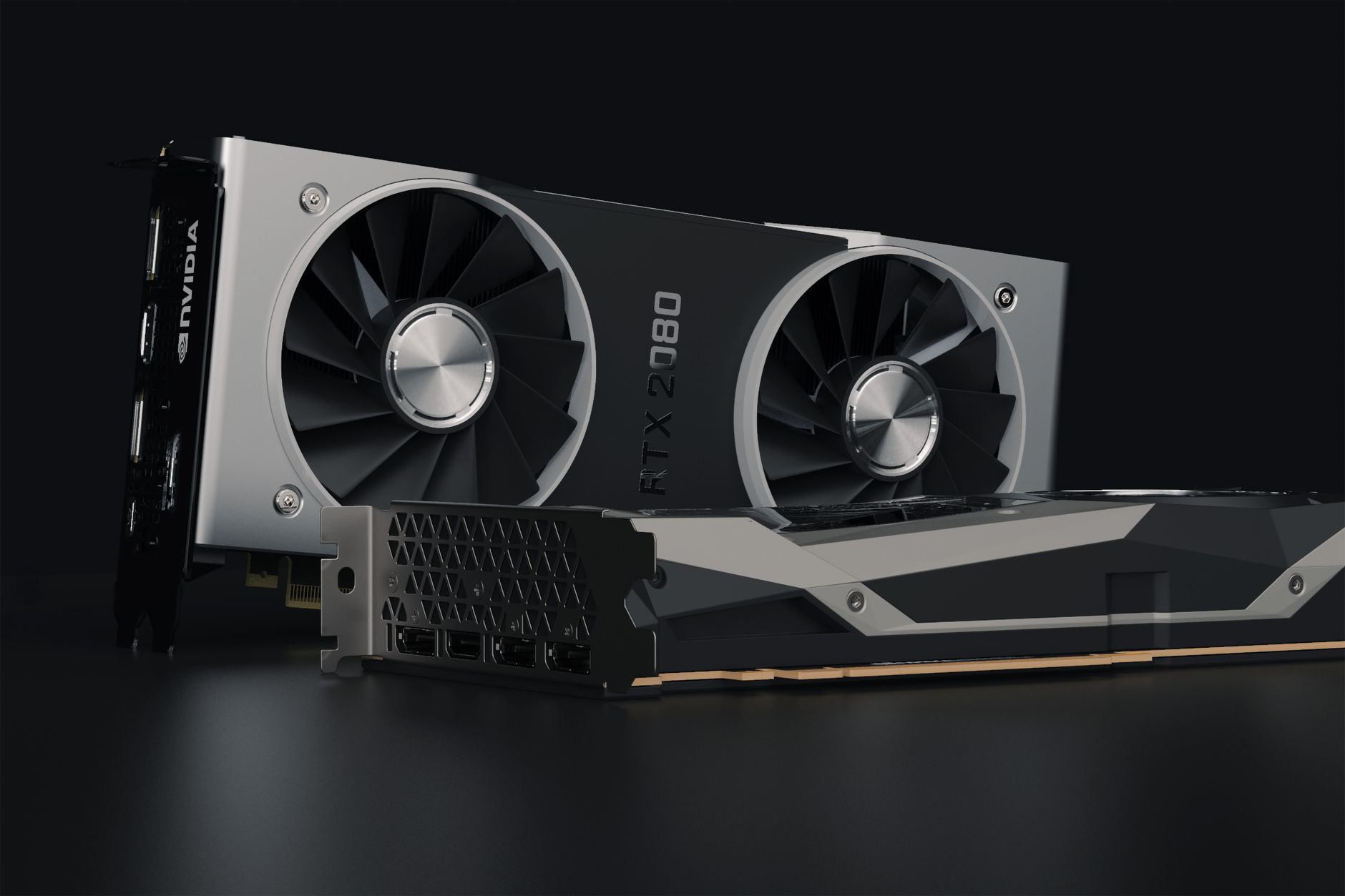
One cluster of crashes traced back to a hardware fault — a specific class of memory error that was triggering corruption under particular workload conditions. This isn’t shocking on its own; at the scale of a large AI compute cluster, hardware fails constantly. What’s notable is that the crash signature was subtle enough that it wasn’t triggering the usual hardware monitoring alerts. The core dump analysis caught it precisely because it was looking at memory state directly, not at logs or metrics that had already passed through layers of abstraction.
This matters more broadly. As AI companies push hardware harder — running chips at higher utilization for longer periods, squeezing every FLOP out of accelerators — the margin for silent hardware degradation gets thinner. You can have a chip that passes diagnostics but still produces occasional bad outputs or corrupted memory writes under sustained load. Finding those faults requires looking at the raw state of the system, not its reported health.
The 18-Year-Old Software Bug
The second finding is the one that will stick with systems engineers. Buried in the codebase was a bug that had been there for approximately 18 years. To be clear: this wasn’t necessarily OpenAI’s own 18-year-old code — at that scale, infrastructure stacks include open-source components, shared libraries, and dependencies that predate the company itself. But the point stands. A defect had survived nearly two decades of software updates, security patches, major version changes, and engineering team turnover without being detected.
How does that happen? A few ways:
- The bug only manifests under specific conditions — conditions that may not have been common in earlier hardware or workload environments
- The failure mode is non-deterministic — meaning it doesn’t crash every time the conditions are met, just sometimes
- The crash signature looks like something else — so when it does fire, engineers attribute it to the wrong cause
- Tests don’t cover the edge case — the bug lives in a path that unit and integration tests never stress
- The code isn’t actively maintained — it works well enough that nobody looks at it closely
The core dump analysis broke this cycle by providing enough crash instances, with enough fidelity, to statistically identify the common thread. It’s the same logic as epidemiology: one case of a rare illness is a curiosity; a hundred cases with a shared exposure is an investigation. OpenAI essentially ran a retrospective cohort study on their own infrastructure crashes.
Why This Approach Matters for AI Infrastructure
Scale Creates New Debugging Opportunities
There’s a counterintuitive silver lining to operating at massive scale: you get more data about rare events. A bug that crashes one in a million processes is effectively undetectable if you’re running a hundred processes. If you’re running a million, you see it daily. OpenAI’s infrastructure is large enough that rare crash rates produce statistically significant samples — which is exactly what made this analysis possible.
Smaller companies don’t have this luxury. A startup running a modest Kubernetes cluster might see a given bug fire twice in a year and write it off as a fluke. This is one of the less-discussed advantages that hyperscalers have: their failure data is rich enough to do real science on.
The Limits of Traditional Observability
The standard observability stack — metrics, logs, traces — is excellent at telling you that something went wrong. It’s much weaker at telling you why, especially for memory corruption or low-level execution bugs. Core dumps fill that gap but come with real operational overhead: storage costs, collection infrastructure, analysis tooling. Most teams don’t build this unless they’re forced to.
OpenAI building dedicated tooling for fleet-wide core dump analysis is a sign of engineering maturity. It also reflects the stakes involved. When you’re running the infrastructure that powers models like GPT-5.6 Sol at commercial scale, “we couldn’t reproduce it” is not an acceptable answer for infrastructure crashes. The reliability bar is too high.
Hardware-Software Co-Failure Is Getting More Common
The fact that this investigation turned up both a hardware fault and a software bug isn’t a coincidence. Modern AI workloads push hardware in ways that expose subtle defects that never fired under lighter loads. A memory subsystem that behaves perfectly when a chip is at 40% utilization may produce occasional errors at 95% — errors that then interact with software assumptions in unexpected ways.
This co-failure pattern is something the industry is only beginning to grapple with seriously. OpenAI has been investing heavily in custom silicon, including the Jalapeño inference chip developed with Broadcom. As that hardware matures and scales, having robust tooling to detect these kinds of hardware-software interactions early will be critical.
What This Means for Engineering Teams
This isn’t just an interesting postmortem from a large company. There are concrete lessons here for anyone running infrastructure at scale.
First: treat crashes as data, not just incidents. Every crash, even a one-off, is a sample from your failure distribution. If you’re not collecting core dumps, you’re throwing away information.
Second: old code is not safe code. The 18-year-old bug survived because it was in a stable, rarely-touched component. Stability and correctness are not the same thing. Dependencies that haven’t been updated in years are worth auditing, especially if they handle memory directly.
Third: hardware and software failures interact. Pure software debugging that ignores hardware state will miss an entire class of bugs. Especially on GPU clusters and custom accelerators, where the hardware is operating closer to its physical limits.
Fourth: statistical methods work. The epidemiology framing isn’t just a cute metaphor — it’s a genuinely useful approach. Collecting enough crash instances and looking for shared features is how you find low-probability bugs that individual investigation would never surface. Teams running large fleets should be thinking about this systematically.
The full technical writeup from OpenAI is worth reading if you work anywhere near production infrastructure — it goes deep on the tooling and methodology in ways that are directly applicable. And for anyone thinking about AI reliability at scale, this kind of rigorous failure analysis is increasingly table stakes. As AI systems take on more critical workloads — from enterprise software to global deployments like Samsung’s ChatGPT Enterprise rollout — the tolerance for mysterious, undiagnosed crashes will only get lower. The teams that build the muscle for this kind of deep debugging now will be better positioned when the stakes are even higher.
Frequently Asked Questions
What is a core dump and why is it useful for debugging?
A core dump is a snapshot of a process’s complete memory state — including heap, stack, and CPU registers — captured at the exact moment it crashes. Unlike log files, which only record what the software was explicitly told to record, a core dump captures everything, making it possible to reconstruct the exact conditions that caused a failure even after the fact.
How did the 18-year-old bug go undetected for so long?
The bug almost certainly only triggered under specific combinations of load, memory layout, and timing conditions that weren’t common in earlier environments. As OpenAI’s workloads scaled up and hardware utilization increased, the conditions for triggering the bug became frequent enough to notice — but still rare enough to avoid detection without systematic analysis across many crash instances.
Is this kind of large-scale core dump analysis something other companies can do?
In principle, yes — the technique is not proprietary. In practice, it requires significant investment in collection infrastructure, storage, and analysis tooling that most smaller teams won’t prioritize unless they’re experiencing persistent mysterious failures. The approach scales better the more crashes you’re collecting, which is why it worked particularly well for a company operating at OpenAI’s size.
Does this affect OpenAI’s products or services for end users?
The bugs have been fixed, so current users shouldn’t be affected. The crashes were in data infrastructure, not in the models themselves, meaning they would have manifested as service reliability issues rather than incorrect model outputs. The investigation was about improving system stability, not model behavior.